Launch offer — valid today only

📄 Digital book in PDF · read it on your phone or print it

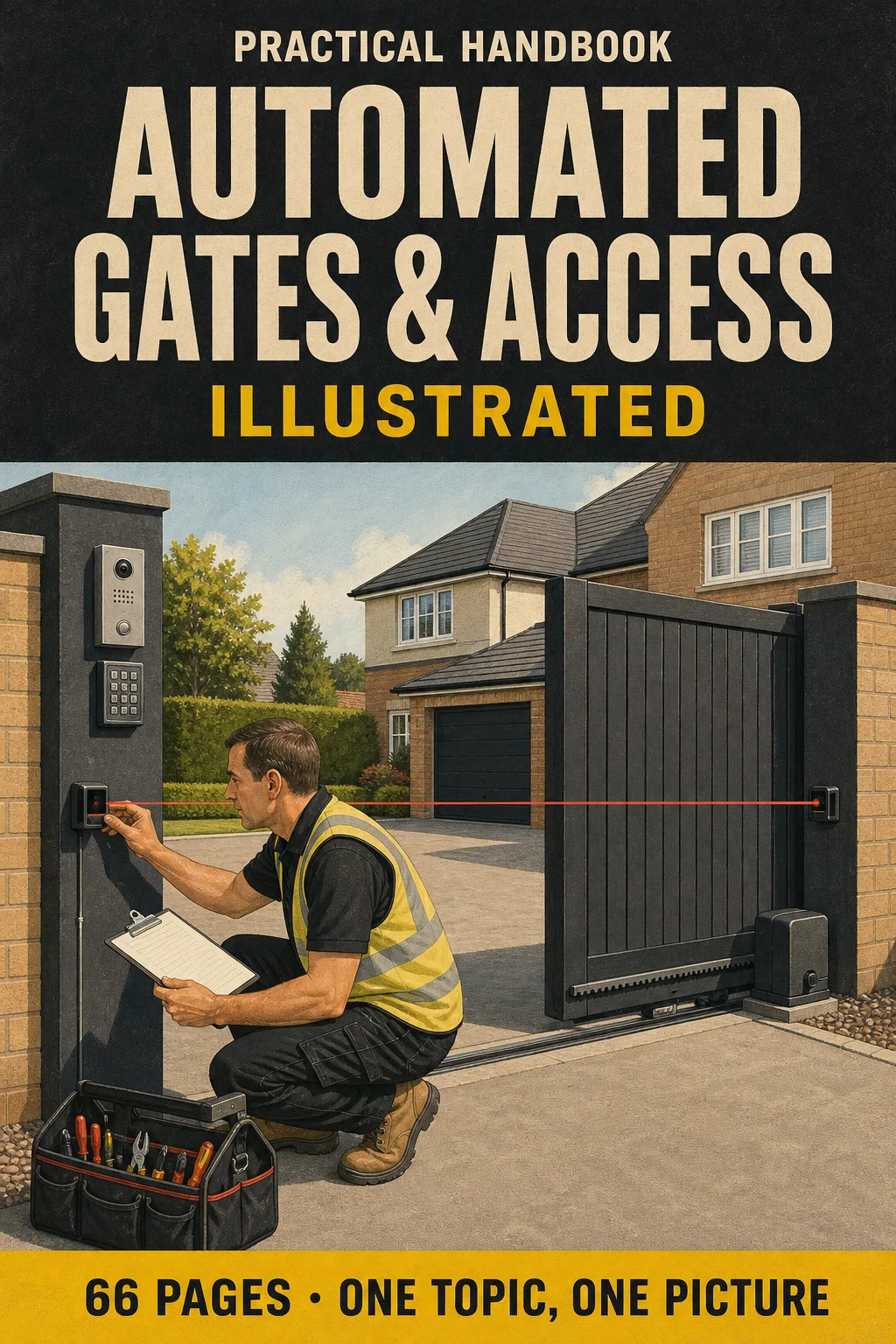
Powered Gates in Drawings: Every Gap, Force and Safety Device Before You Hand Over One Topic on Every Page

Written for UK jobs: BS EN 12453, HSE guidance and BS 7671. Swing and sliding operators, hazards, minimum gaps, photocells and safety edges, wiring, force limits and handover. Each topic has its own page: the drawing first, then what you need to remember. 66 illustrated pages.

GET THE BOOK FOR THE VAN

🔒 Secure checkout · PDF by email · 30-day guarantee

Every topic, its own pageEvery hazard, gap and safety device drawn on a real gate, with the explanation alongside
66 illustrated pages9 parts, from how a powered gate works to the pre-handover checklist
Up-to-date sourcesBS EN 12453, HSE guidance on powered gates and BS 7671
PDF by emailFormat

Look Inside the Book

Every page has a big drawing and a box with the gaps, forces and steps you need to know:

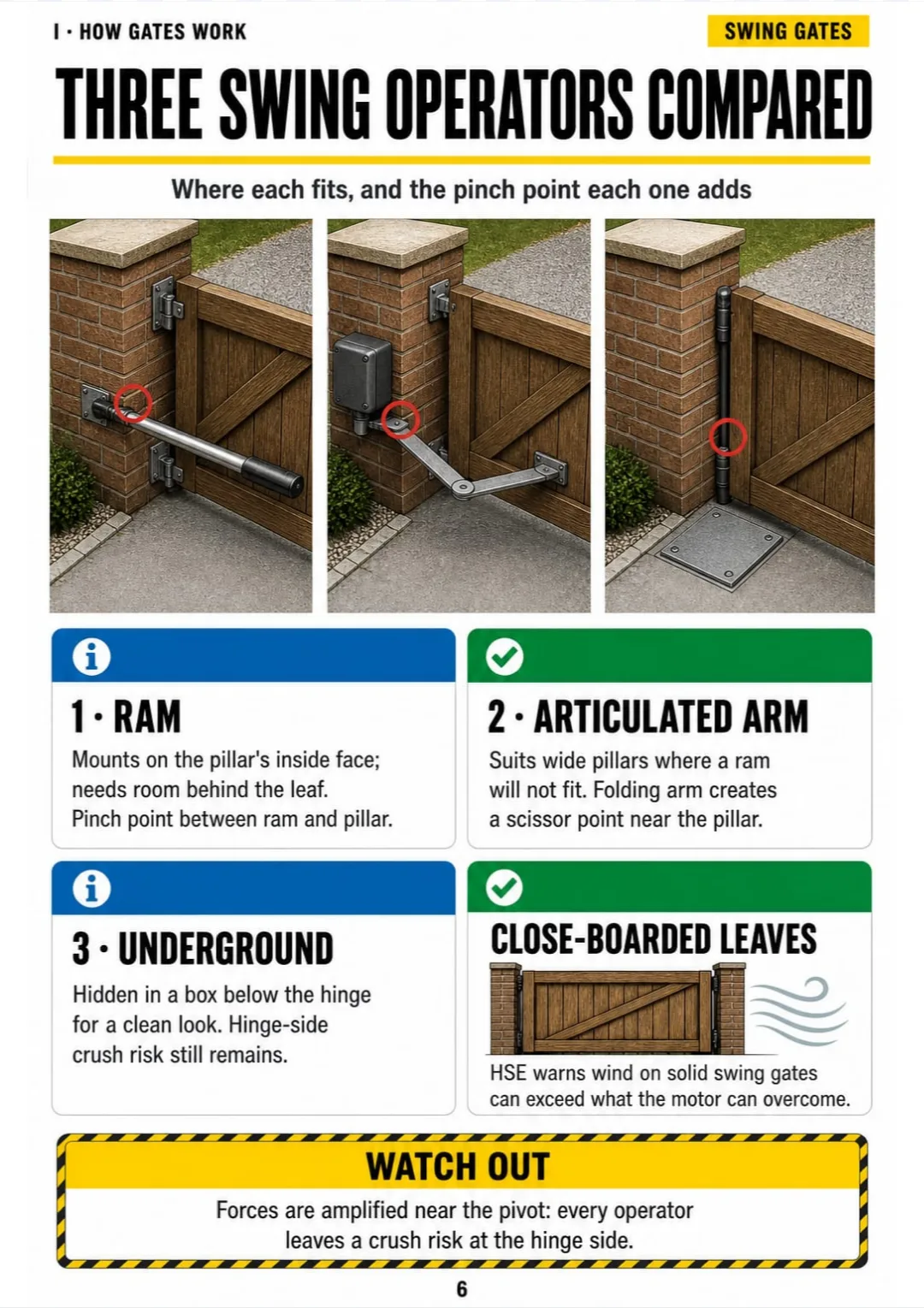
Ram, articulated arm and underground operators: where each fits and where it pinches.
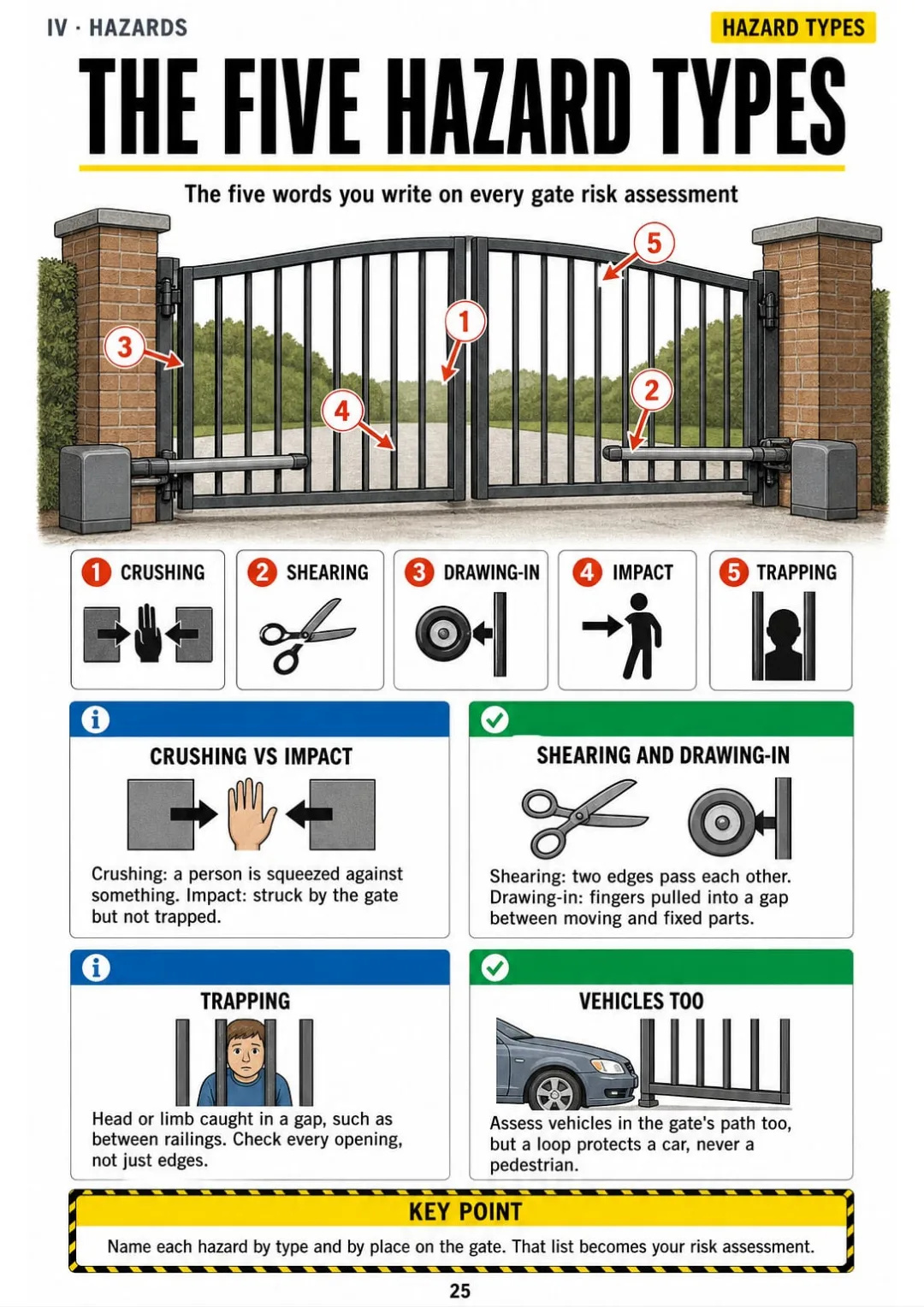
Crushing, shearing, drawing-in, impact, trapping: each one marked on a real swing gate.
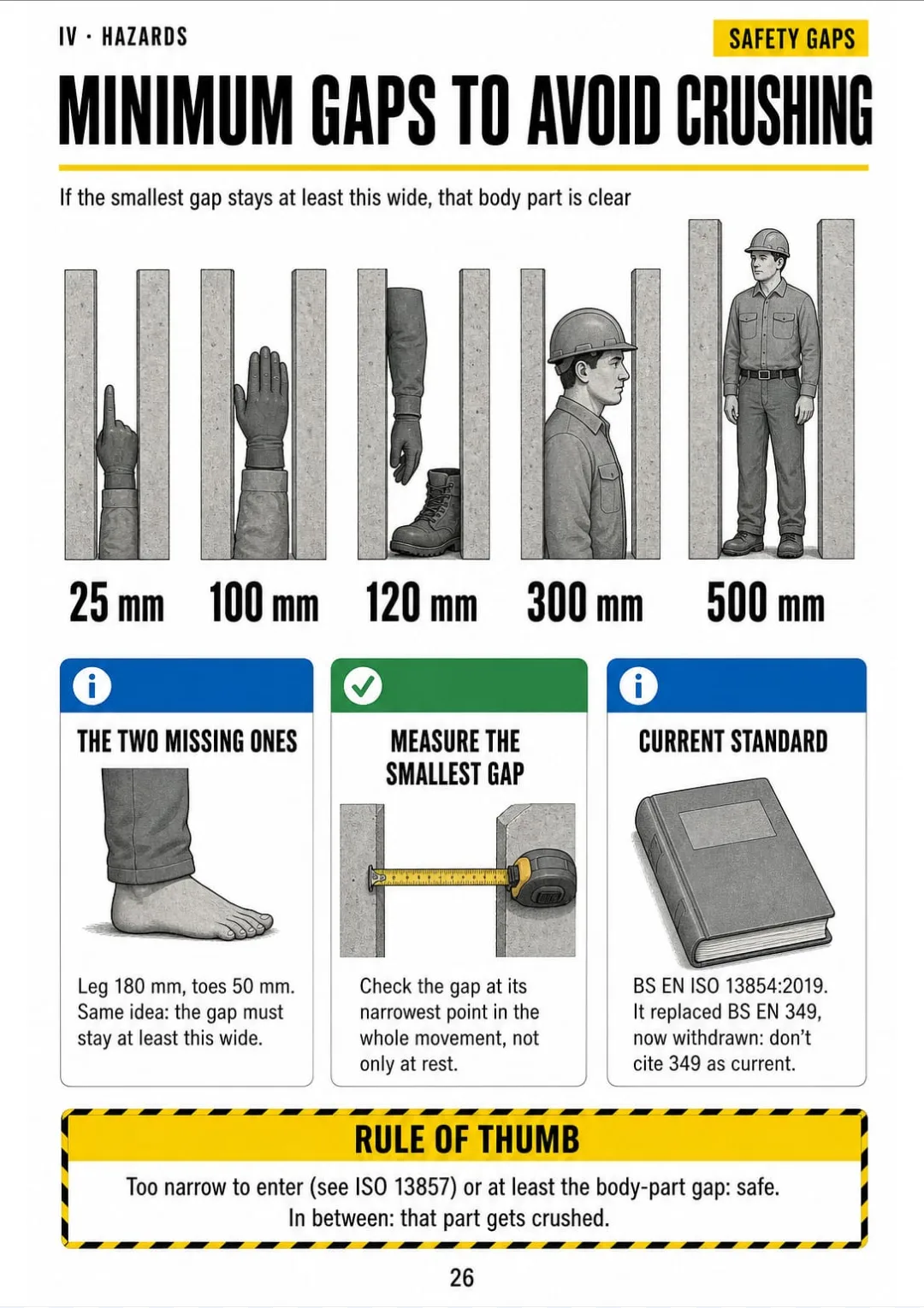
Finger 25 mm, hand 100 mm, arm and foot 120 mm, head 300 mm, body 500 mm.
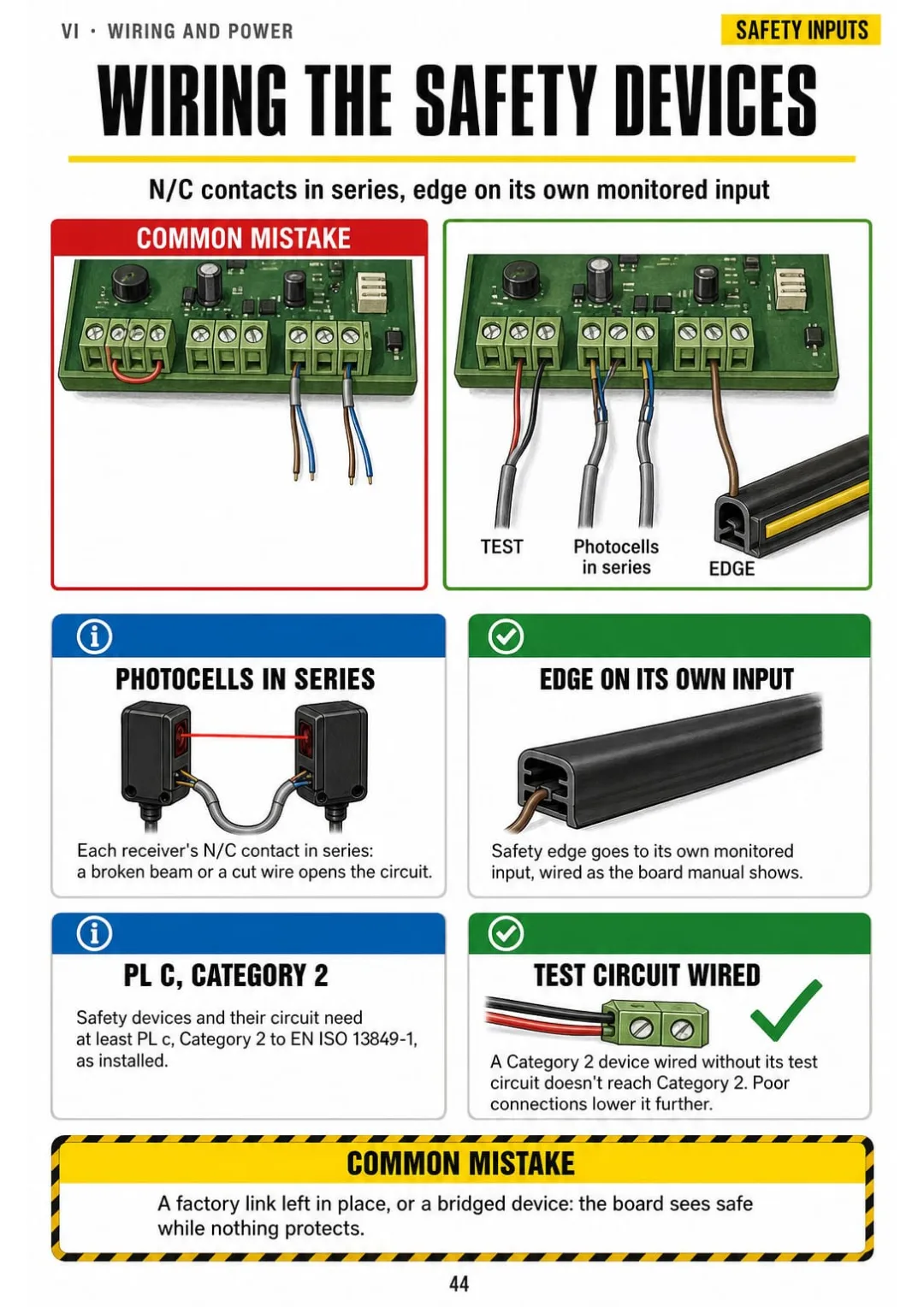
Photocells N/C in series, edge on a monitored input, every factory link removed.
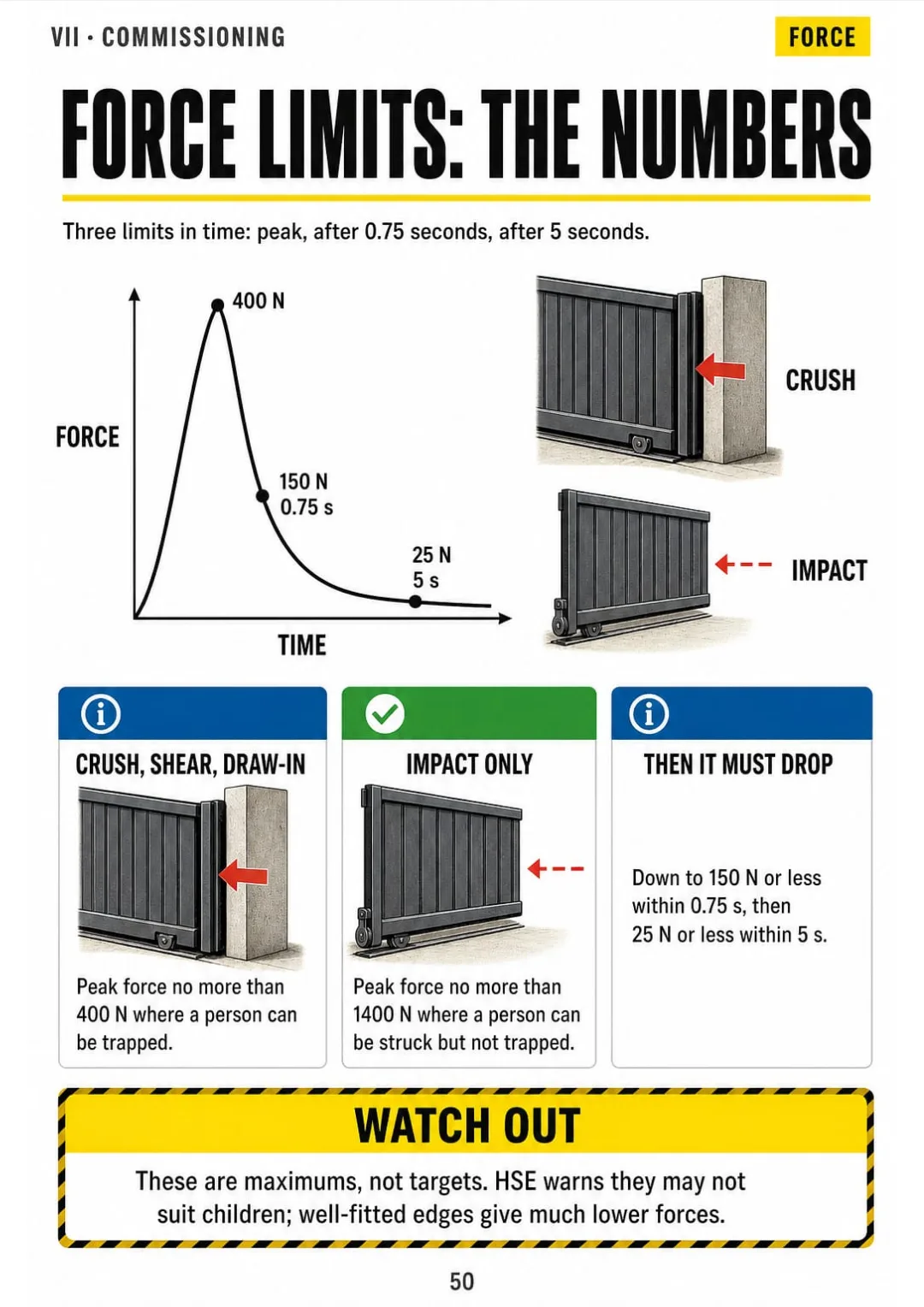
BS EN 12453 force limits on one graph: 400 N crush, 1400 N impact.
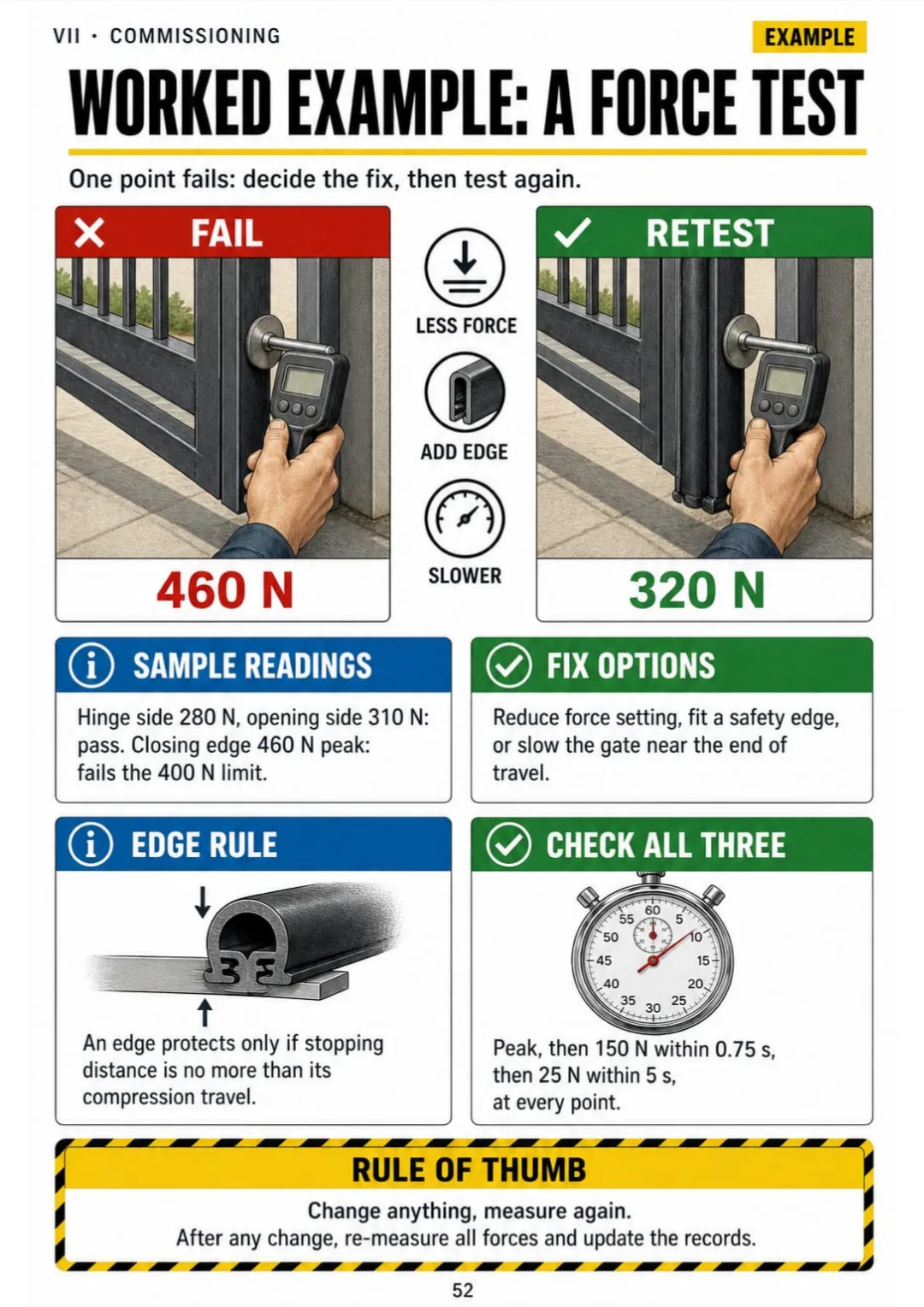
Sample swing gate test: closing edge at 460 N fails, fix, retest.
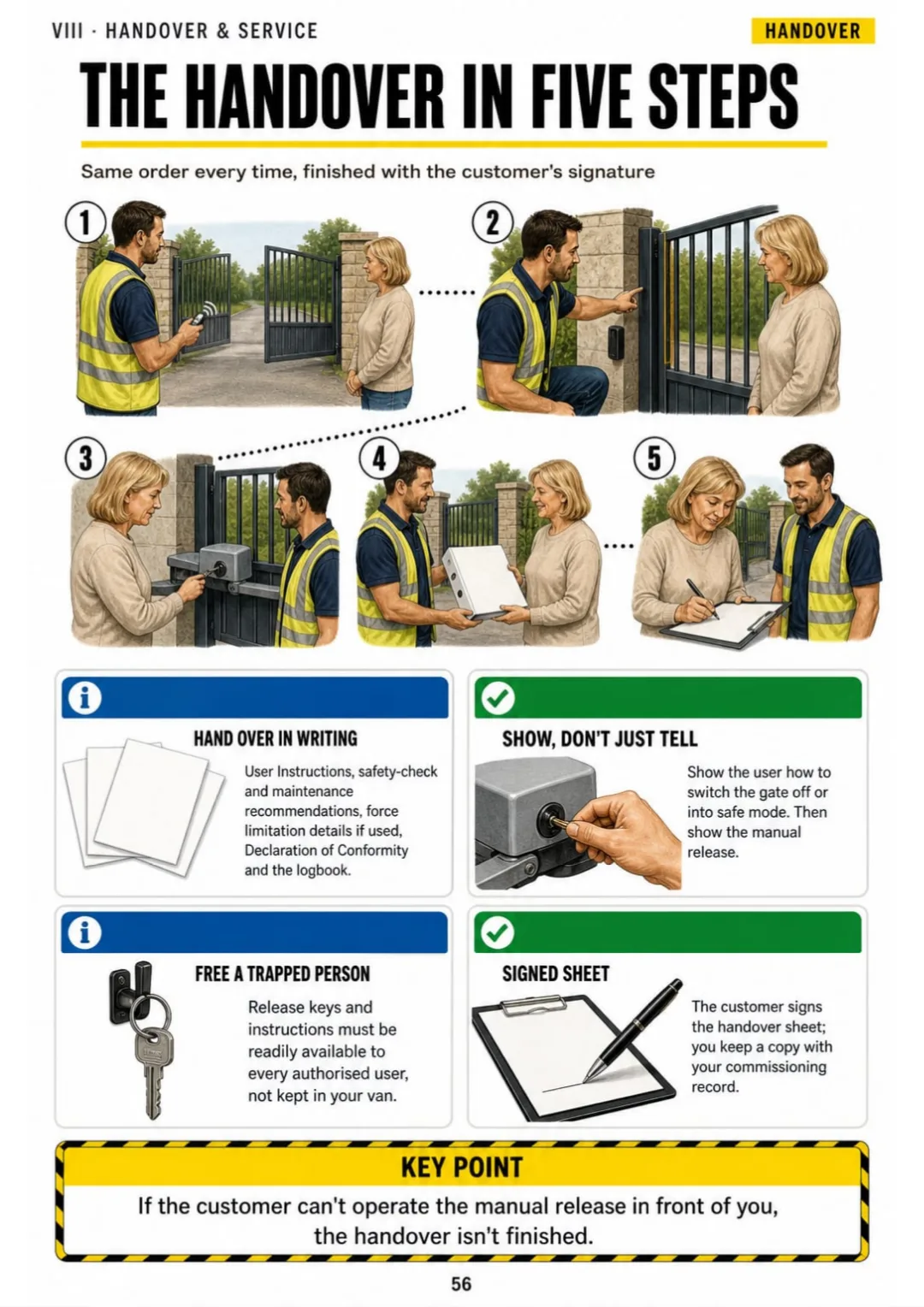
Handover: working gate, safety devices, manual release, instructions, logbook, signature
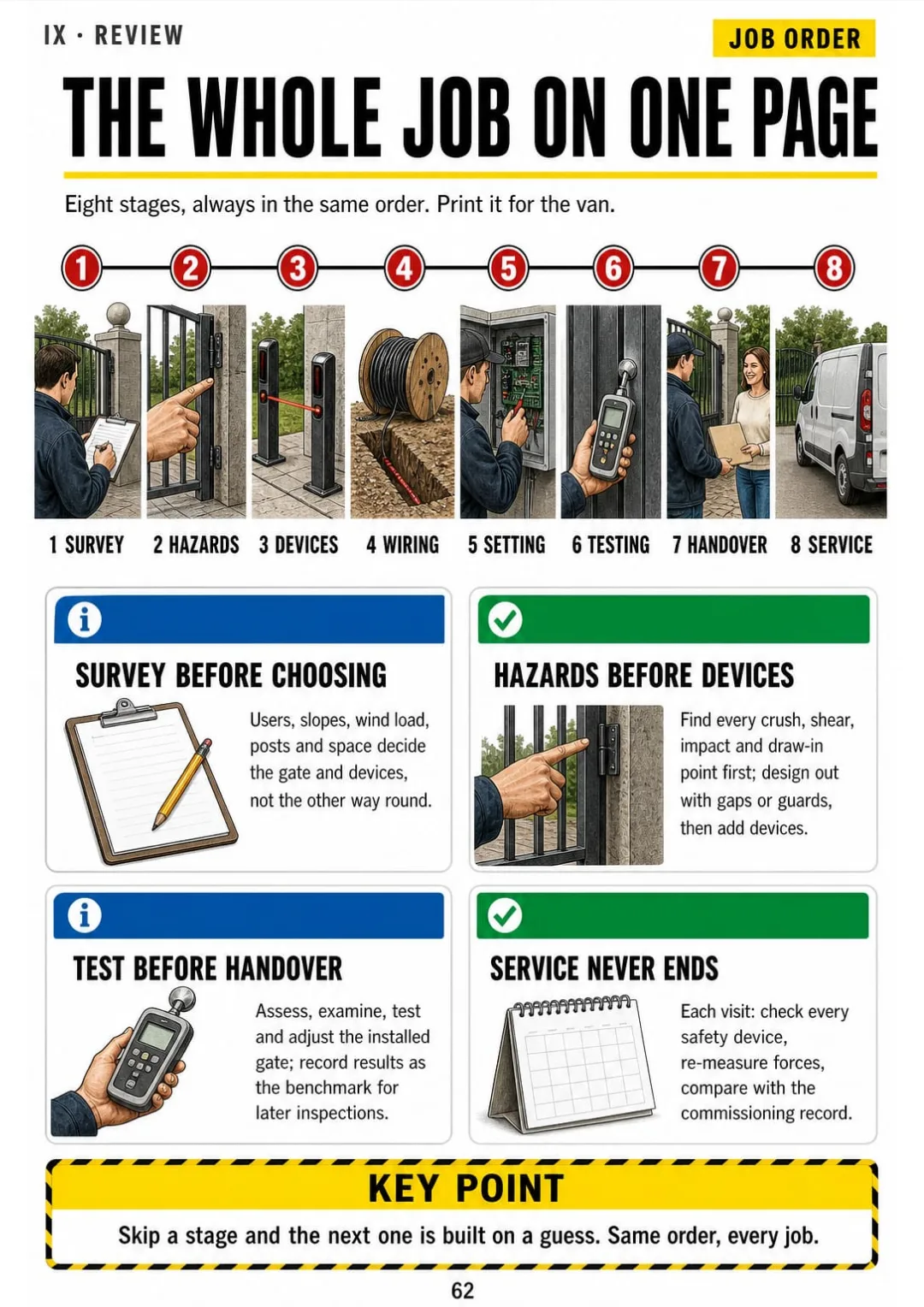
8 stages, one strip: survey, hazards, devices, wiring, setting, testing, handover, service.

Swipe to see more →

These are real pages from the book. The table of contents is the full one: 9 parts and 62 topics.

The Problem Isn't You. It's How It Was Explained to You.

You're stood by a heavy swing gate you've just hung. The customer asks if a child's hand could get trapped between the leaf and the pillar, and you've got the tape out without knowing which number you're checking against.

The figures do exist, but they're spread across paragraphs and cross-references: one gap for each part of the body, tucked inside a clause. You read them in the van at lunchtime and they've gone by the time you're back on site.

Finger 25 mm, hand 100 mm, arm and foot 120 mm, head 300 mm, body 500 mm.

In the book, «Minimum gaps to avoid crushing» is a single page. A figure stands next to the gate with each gap drawn where it applies: finger 25 mm, hand 100 mm, arm and foot 120 mm, head 300 mm, body 500 mm.

The same goes for the hinge-side gap, photocell heights and positions, safety edges, force limits and the handover. Each one has its own page, drawn on a real swing, sliding or barrier gate.

You measure, you compare it with the drawing and you give the customer an answer without going back to the manual.

COMPARE FOR YOURSELF

The Same Topic, Two Ways to Learn It

THIS
  • The manual: line after line of text
  • Hazards described only in words
  • You get to site still unsure
Hazards associated with powered gates shall be identified at all points along the travel of the gate leaf and at all fixed elements adjacent thereto. Such hazards include, inter alia, crushing between the moving leaf and a fixed structure, shearing between parts moving relative to one another, drawing-in at openings in the infill or at the rack and rollers, impact with persons within the path of travel, and trapping of persons or parts of the body, the relevance of each depending upon gate type, location and category of user.
FOR THIS
  • Each hazard marked on a real gate
  • The gaps and forces in one box
  • You see it and you get it
Crushing, shearing, drawing-in, impact, trapping: each one marked on a real swing gate.
CONTENTS

Take a Look at the 9 Parts and 62 Topics

How a powered gate works, the law and your role, survey, hazards, safety devices, wiring, setting and testing, handover and service, and a final review: 66 pages, all illustrated

IHow a Powered Gate Works · pp. 5-11
  1. The Gate as a Machine
  2. Swing Gate Operators: Ram, Articulated Arm, Underground
  3. Sliding Gates: Rack, Pinion and Track
  4. Cantilever Gates and Rising Barriers
  5. The Control Board: Inputs and Outputs
  6. 24 V DC vs 230 V AC Operators
  7. Manual Release: The Part Everyone Forgets
IIThe Law and Your Role · pp. 12-17
  1. When You Automate a Gate, You Become the Manufacturer
  2. The Standards Family in One Picture
  3. Converting an Existing Manual Gate
  4. Workplace and Shared Gates
  5. The Technical File: What Goes In It
  6. Declaration of Conformity and the Gate Label
IIISite Survey and Gate Choice · pp. 18-24
  1. The Survey Walk-Round in the Same Order
  2. Who Uses the Gate?
  3. Slopes, Falls and Ground Conditions
  4. Gate Weight and Wind Load
  5. Posts, Pillars and Hinges
  6. Space Around the Gate
  7. Pedestrian Gate or Not?
IVHazards: Where People Get Hurt · pp. 25-32
  1. The Five Hazard Types
  2. Minimum Gaps to Avoid Crushing
  3. The Hinge-Side Gap
  4. Closing Edge of a Swing Gate
  5. Opening Side: Walls, Cars and the Fence
  6. Sliding Gate: Closing Edge and Run-Back
  7. Infill, Mesh and Drawing-In
  8. Writing the Risk Assessment
VSafety Devices · pp. 33-40
  1. Levels of Protection: Choosing the Right Mix
  2. Photocells: How They Work
  3. Photocell Heights and Positions
  4. Safety Edges
  5. Self-Test and Monitoring
  6. Guards and Physical Barriers
  7. Warning Lamp and Signage
  8. Loop Detectors and Vehicle Safety
VIWiring and Power · pp. 41-47
  1. Supply from the Consumer Unit
  2. Cable Types and Routes
  3. Wiring the Motors
  4. Wiring the Safety Devices
  5. Earthing and Bonding
  6. Battery Backup and Solar
  7. Access Control Inputs
VIISetting, Testing and Commissioning · pp. 48-55
  1. Mechanical Setting Before Power
  2. Learning Travel and Slowdowns
  3. Force Limits: The Numbers
  4. Where and How to Measure Force
  5. Worked Example: Reading a Force Test
  6. Testing Every Safety Device
  7. Electrical Testing
  8. Commissioning Record
VIIIHandover, Service and Faults · pp. 56-61
  1. The Handover in Five Steps
  2. What the Customer Must Keep
  3. Service Visits: What to Check
  4. Fault-Finding in the Same Order
  5. Gate Reverses or Stops Halfway
  6. Taking Over Someone Else's Gate
IXReview: Checklists and Common Mistakes · pp. 62-66
  1. The Whole Job on One Page
  2. Common Mistakes on Swing Gates
  3. Common Mistakes on Sliding Gates
  4. Common Paperwork Mistakes
  5. Pre-Handover Checklist

One Page, One Topic, All Clear

Think of it this way:

The install's done and you're setting the force. You put the meter at the closing edge, it gives you a reading, and you need to know right there whether the gate passes.

You open the force limits page and see one graph with the two numbers that matter: 400 N for crushing, 1400 N for impact. On the next page there's a worked test: 460 N at the closing edge fails, here's the fix, then the retest.

BS EN 12453 force limits on one graph: 400 N crush, 1400 N impact.

The same goes for photocell heights, safety edges, wiring the safety devices, the handover and fault-finding: each one on its own page, in the order you do the job.

Automated Gates & Access Illustrated is 66 illustrated pages in 9 parts, with the job in 8 stages from survey to service, and it finishes with the whole job on one page, checklists and the most common mistakes.

What you see drawn, you don't have to memorize.

What's Inside Automated Gates & Access Illustrated:

Ipp. 5-11

How a Powered Gate Works

The gate as a machine, swing, sliding, cantilever and barrier operators, the control board, 24 V vs 230 V and the manual release.

IIpp. 12-17

The Law and Your Role

Why automating a gate makes you the manufacturer, the standards in one picture, converting manual gates, shared gates, the technical file and the gate label.

IIIpp. 18-24

Site Survey and Gate Choice

The survey walk-round in the same order, who uses the gate, slopes, gate weight and wind load, posts and hinges, space around the gate and pedestrian gates.

IVpp. 25-32

Hazards: Where People Get Hurt

The five hazard types, minimum gaps, the hinge side, closing and opening edges, sliding gate run-back, infill and drawing-in, and writing the risk assessment.

Vpp. 33-40

Safety Devices

Choosing the right mix of protection, photocells and their positions, safety edges, self-test, guards, warning lamp, signage and loop detectors.

VIpp. 41-47

Wiring and Power

Supply from the consumer unit, cable types and routes, wiring motors and safety devices, earthing, battery backup, solar and access control inputs.

VIIpp. 48-55

Setting, Testing and Commissioning

Mechanical setting before power, learning travel, force limits and how to measure them, a worked force test, testing every device and the commissioning record.

VIIIpp. 56-61

Handover, Service and Faults

The handover in five steps, what the customer keeps, service visits, fault-finding in the same order, gates that reverse or stop halfway, and taking over someone else's gate.

IXpp. 62-66

Review: Checklists and Common Mistakes

The whole job on one page, common mistakes on swing and sliding gates and on paperwork, and the pre-handover checklist.

At the end of the book: Worked examples for force checks, gate weight and fault-finding, blank sheets to print, and a review part with checklists and common mistakes.
Plus: 2 Free Books

Gate Job Scenarios: Worked Practice Cases

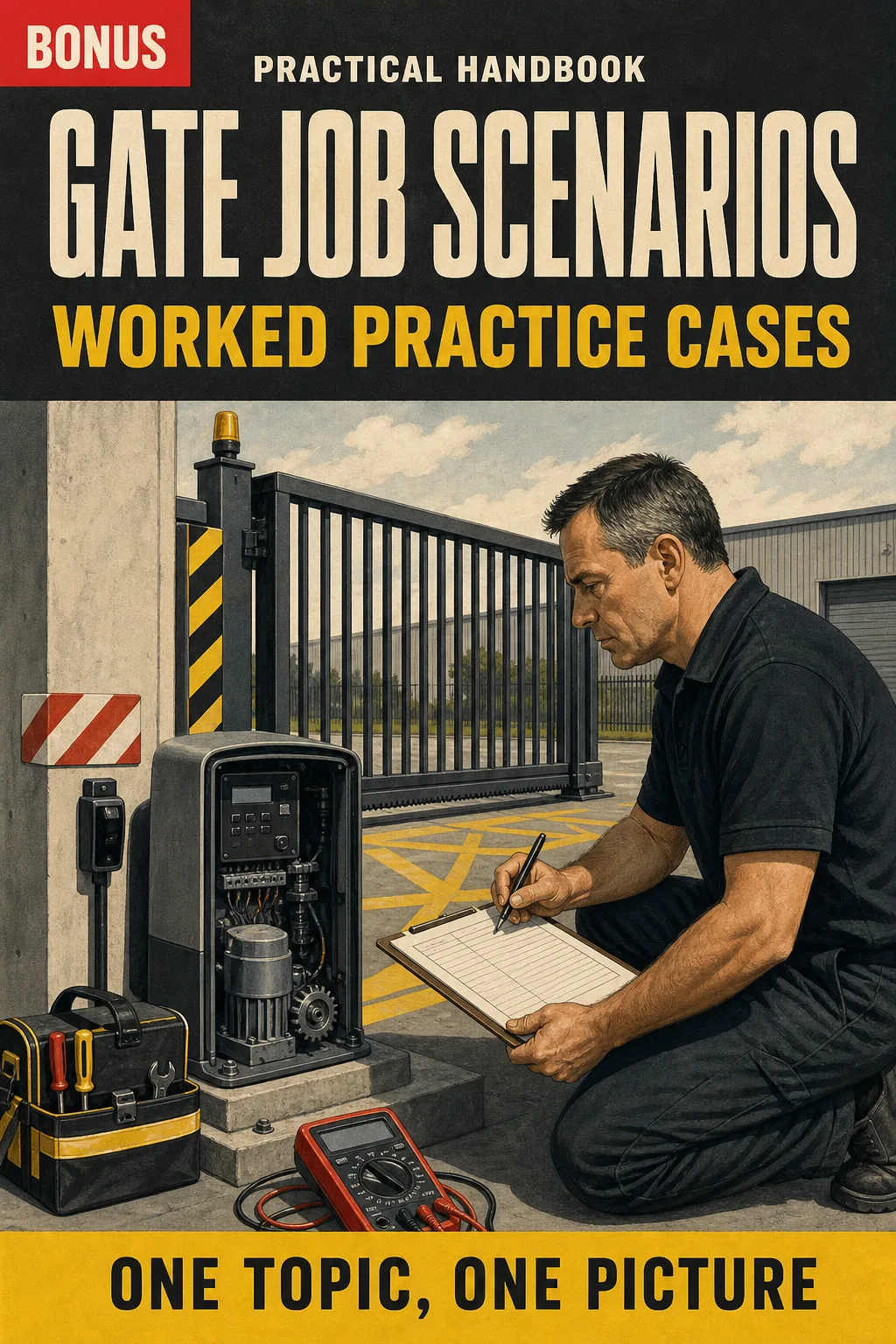
BONUS 1: «Gate Job Scenarios: Worked Practice Cases»

Value on its own: US$ 17.90

Real site situations (heavy swing gate on a slope, sliding gate next to a footpath, barrier on a shared drive) to work through step by step, so you practise the risk assessment and device choice before you're on the job.

Gate Safety Quick-Reference Cards

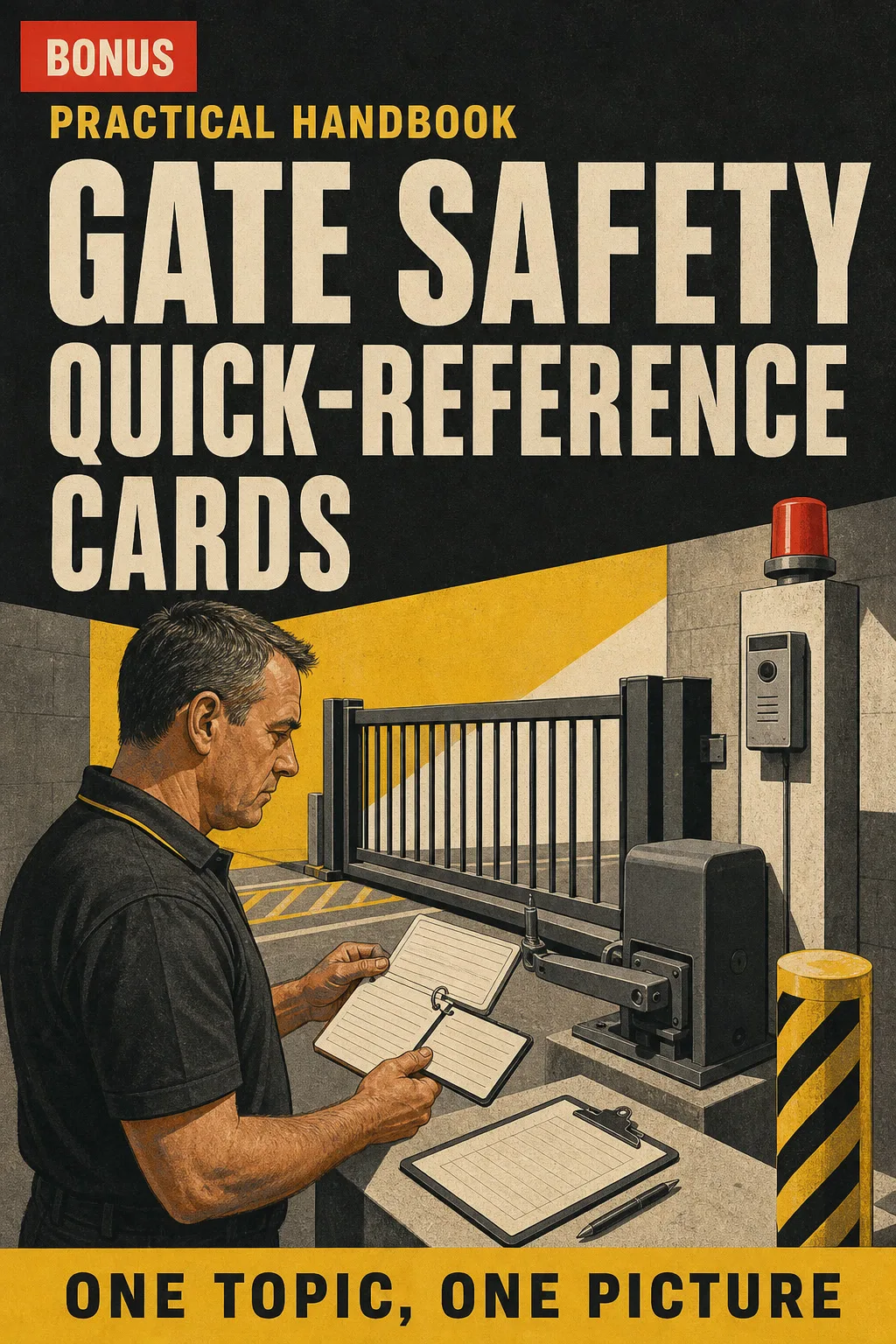
BONUS 2: «Gate Safety Quick-Reference Cards»

Value on its own: US$ 14.90

The safe gaps, photocell and safety edge positions, test order and the most common mistakes on printable cards, so you can check what you need at a glance in the van.

Automated Gates & Access Illustrated with 2 Free Books

  • Automated Gates & Access Illustrated: 66 illustrated pagesUS$ 63
  • BONUS 1: Gate Job Scenarios: Worked Practice CasesUS$ 17.90
  • BONUS 2: Gate Safety Quick-Reference CardsUS$ 14.90
  • High-resolution PDF to printIncluded
Total value US$ 95.80
YOUR PRICE:
US$ 27
You save US$ 68.80
YES, I WANT AUTOMATED GATES & ACCESS ILLUSTRATED FOR US$ 27

📄 This is a digital PDF book sent to your email: nothing is printed or shipped.

Secure purchaseEncrypted payment30-day guarantee

PDF by email: We email you Automated Gates & Access Illustrated as a PDF, together with the two free books. It's a single payment: no installments, no extra charges.

Who This Book Is For

You're adding powered gates to your fencing work

You're adding powered gates to your fencing work

You already hang gates. The book shows you what changes once there's a motor on them: the hazards, the safety devices and the handover, one page each.

You're the electrician asked to wire the gate

You're the electrician asked to wire the gate

You know BS 7671. The book shows the gate side: how the motors and safety devices go on the board, why the factory links come out, and where your job ends and the installer's starts.

You've been fitting gates for years

You've been fitting gates for years

Everything in one place to keep in the van: gaps in millimetres, force limits, photocell positions and the paperwork, at a glance.

Everything You Get Today

US$ 95.80US$ 27
YES, I WANT AUTOMATED GATES & ACCESS ILLUSTRATED FOR US$ 27

📄 This is a digital PDF book sent to your email: nothing is printed or shipped.

30DAYS
GUARANTEE

30-Day Guarantee

Try Automated Gates & Access Illustrated for 30 days, bonus books included.

We refund everything if the file won't open, if the book isn't what you see here, if you were charged twice or if the email doesn't arrive. Just email us.

You pay once. No subscriptions.

Frequently Asked Questions

Is it for me if I've been fitting gates for years?

Yes. It doesn't teach you to hang a gate: it puts the hazards, gaps, force limits, wiring and handover in one place, drawn and in the same order, so you can check them on site.

Where does the content come from?

From BS EN 12453, BS EN 13241, BS EN 12604, BS EN ISO 13854, BS EN ISO 13857, the Supply of Machinery (Safety) Regulations 2008, HSE guidance on powered gates and BS 7671, explained in our own words and drawings. It's written for installs in the UK. Always check the current version of each document.

Is it official material?

No. It's an independent illustrated book. It isn't published or endorsed by BSI, the HSE, the IET or any gate operator manufacturer.

Does it replace training or the manufacturer's instructions?

No. It's a reference to learn from and check against. It gives no certificate and doesn't make a gate compliant on its own. It doesn't replace training, the manufacturer's instructions or the risk assessment for each site, and fixed mains wiring must be done by a qualified electrician.

Will it work with the operator brand I use?

It isn't tied to any brand. It covers what every powered gate needs: hazards, gaps, safety devices, force limits, wiring logic and handover. Terminal names and menus change from board to board, so for those always follow your manufacturer's instructions.

When and how does it arrive?

As a PDF by email, to the address you enter at checkout.

Do I have to pay every month?

No. It's a one-off payment. No subscription.

Can I have it on paper?

Yes. It's a printable PDF: print the whole book or just the pages you want to keep in the van.

How does the refund work?

You have 30 days. We refund everything if the file won't open, if the book isn't what you see on this page, if you were charged twice or if the email doesn't arrive: just email us.

Before You Close This Page

No more rereading the guidance and getting nothing from it.

The hinge-side gap: you see it drawn, and that's it.

You turn up to every job knowing where everything is.

Drawings make studying faster.

The book is right below.

One-time payment: US$ 27 · Guarantee: 30 days · PDF by email

YES, I WANT AUTOMATED GATES & ACCESS ILLUSTRATED FOR US$ 27

📄 This is a digital PDF book sent to your email: nothing is printed or shipped.